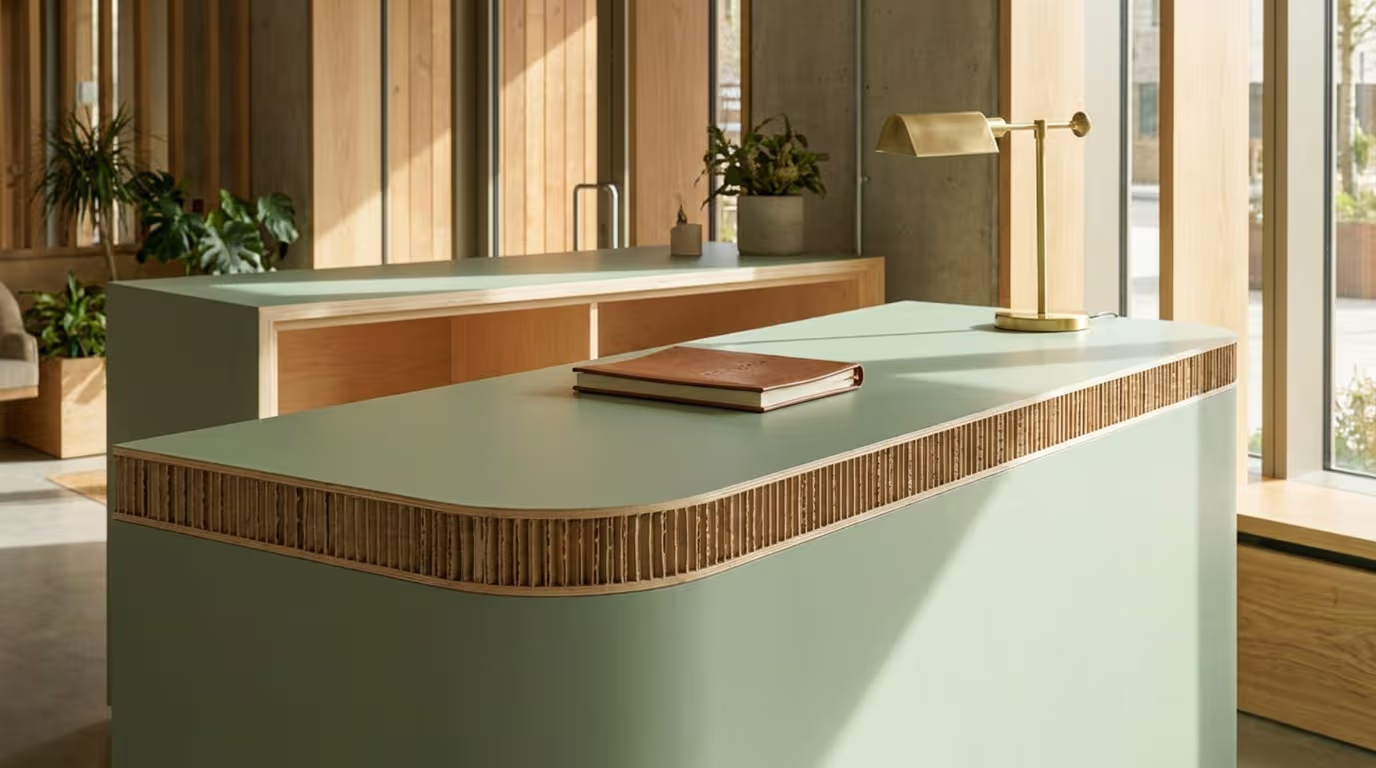
Every Sustainable Ply panel is pressed from recovered cardboard fibre sourced within twenty miles of our Lewes workshop, and every panel comes back to us at end-of-life. No virgin timber, no landfill exit, no take-back offered as an afterthought. The take-back scheme is written into the spec sheet on day one.
Workshop
Lewes, East Sussex
Recovery radius
20 miles, 5 partner streams
Compliance
UK CMA Green Claims Code
By the numbers
Four figures we’ll stand behind.
61%
Lower embodied carbon
12.49 kg CO2e per panel vs 32.10 kg CO2e for equivalent plywood. Indicative, non-EPD. Full methodology disclosed below.
30–50%
Lighter than MDF / plywood
Honeycomb core carries structural load at a fraction of the panel mass, cutting haulage emissions and on-site handling load.
5
Partner recovery streams
Redroaster, Boho Gelato, kava Services, Inbuild, NHS. All within 20 miles of the Lewes workshop.
100%
Returnable at end-of-life
Every panel ships with a batch ID. Return for reuse, repurposing, or recycling into the next production run.
Lewes workshop, finished panels awaiting dispatch and take-back collection runs.04
Four stages from spec sheet to second life. The take-back scheme is included as standard on every project: no upcharge, no opt-in, no end-of-life surprise.
01
Specify
Panel thickness, sheet size, finish, and batch ID are agreed at quote stage. The take-back terms ship with the spec sheet, written into the project record from day one, not bolted on at handover.
02
Use
Panels are CNC-cut and delivered to site. Installed as furniture, exhibition build, acoustic treatment, or retail fit-out. The typical service life sits between three and twelve years depending on application.
03
Return
At refit, refurb, or strike-down, quote the batch ID and we arrange collection. Most UK and EU returns are routed via consolidated freight to keep return-leg emissions low. Single point of contact: take-back@sustainableply.com.
04
Reuse
Sound panels are graded for direct reuse. Damaged panels are repurposed into smaller stock sizes or pulped back into honeycomb-core fibre for the next production run. Nothing in the take-back stream exits to landfill.
Methodology & sources
Every figure, shown working.
UK CMA Green Claims Code requires that environmental claims are specific, verifiable, and sourced. The expandables below disclose our assumptions, calculations, and the gap between current indicative figures and EPD certification.
How is the 61% lower-carbon figure calculated?
The 61% figure compares the indicative embodied carbon of one standard Sustainable Ply panel (12.49 kg CO2e for an 18 mm, 2440 × 1220 mm honeycomb panel) against a published industry average for equivalent dimensioned plywood (32.10 kg CO2e). The calculation is cradle-to-gate: it covers recovered-fibre collection within 20 miles of Lewes, pressing energy from our workshop’s metered supply, and the kraft facing-sheet material declaration. It does not yet include the haulage offset from take-back returns. Source: internal LCA spreadsheet, June 2025. [TBC – client to confirm plywood comparison source.]
What is the embodied-carbon comparison source?
The plywood benchmark of 32.10 kg CO2e is taken from publicly available industry-average data for 18 mm structural plywood at the standard sheet size. We have not compared against any single manufacturer’s product; we use an industry average to avoid cherry-picking the worst performer. Source: [TBC – client to confirm whether ICE database v3 or WoodSolutions EPD figures are used.] Once our own EPD certification completes, we will republish both figures on a like-for-like, third-party-verified basis.
Why do you describe the figures as “indicative, non-EPD”?
An Environmental Product Declaration (EPD) is a third-party-verified document produced to a recognised standard (ISO 14025, EN 15804). Until our EPD is published, every carbon figure on this site is internally calculated and clearly marked as indicative. We disclose this because the UK CMA Green Claims Code requires that comparative environmental claims are substantiated, and a self-published figure is not the same evidence-class as a verified EPD. EPD certification work is currently in progress with an accredited assessor. Source: [TBC – client to confirm assessor name and expected publication date.]
How does take-back logistics actually work?
Every panel ships with a batch ID printed on the underside or on the spec sheet. When a project reaches end-of-life (refit, refurb, lease-end, exhibition strike-down), the specifier quotes the batch ID and we coordinate collection. UK returns are typically routed via consolidated freight on our existing delivery routes to keep the return-leg footprint as close to zero net additional emissions as possible. EU returns are handled on a project-by-project basis. There is no take-back fee on the standard scheme. Source: internal logistics protocol, current as of 2026.
What happens to a returned board once it’s back at the workshop?
Returned panels are graded on arrival into three streams. Reuse: structurally sound panels with minimal surface damage are re-stocked and offered at a discount on subsequent projects. Repurpose: panels with localised damage are CNC-cut down to smaller standard sizes for furniture-scale work or acoustic tile production. Recycle: panels beyond practical reuse are pulped and the recovered fibre re-enters our honeycomb-core feedstock. Nothing in the take-back stream is sent to landfill or incineration. Source: internal grading SOP, current as of 2026.
Are the recovered-fibre partners audited?
Each of the five partner streams (Redroaster, Boho Gelato, kava Services, Inbuild, and NHS) supplies a documented material origin per collection. We log volume, source, and grade against each batch ID, which means a finished panel can be traced back to the contributing recovery stream. We do not currently hold third-party chain-of-custody certification; this is on the EPD roadmap. Source: [TBC – client to confirm whether FSC Recycled or equivalent certification is targeted.]
Next step
Specify a panel. Keep the material in circulation.
Order a free sample, ask for the take-back terms in writing, or talk through a specific spec with the Lewes workshop directly.

 Redroaster Coffee roastery, Brighton Coffee-grade packaging cardboard
 Boho Gelato Artisan gelato, Brighton Food-grade recovered fibre & packaging
 Mrs B Preloved Reuse retailer, Sussex Retail-grade recovered cardboard
 In-Build Construction contractor, Sussex Site-recovered packaging cardboard
 Kava Surfaces Surface specialists, Sussex Trade-recovered display & packaging board